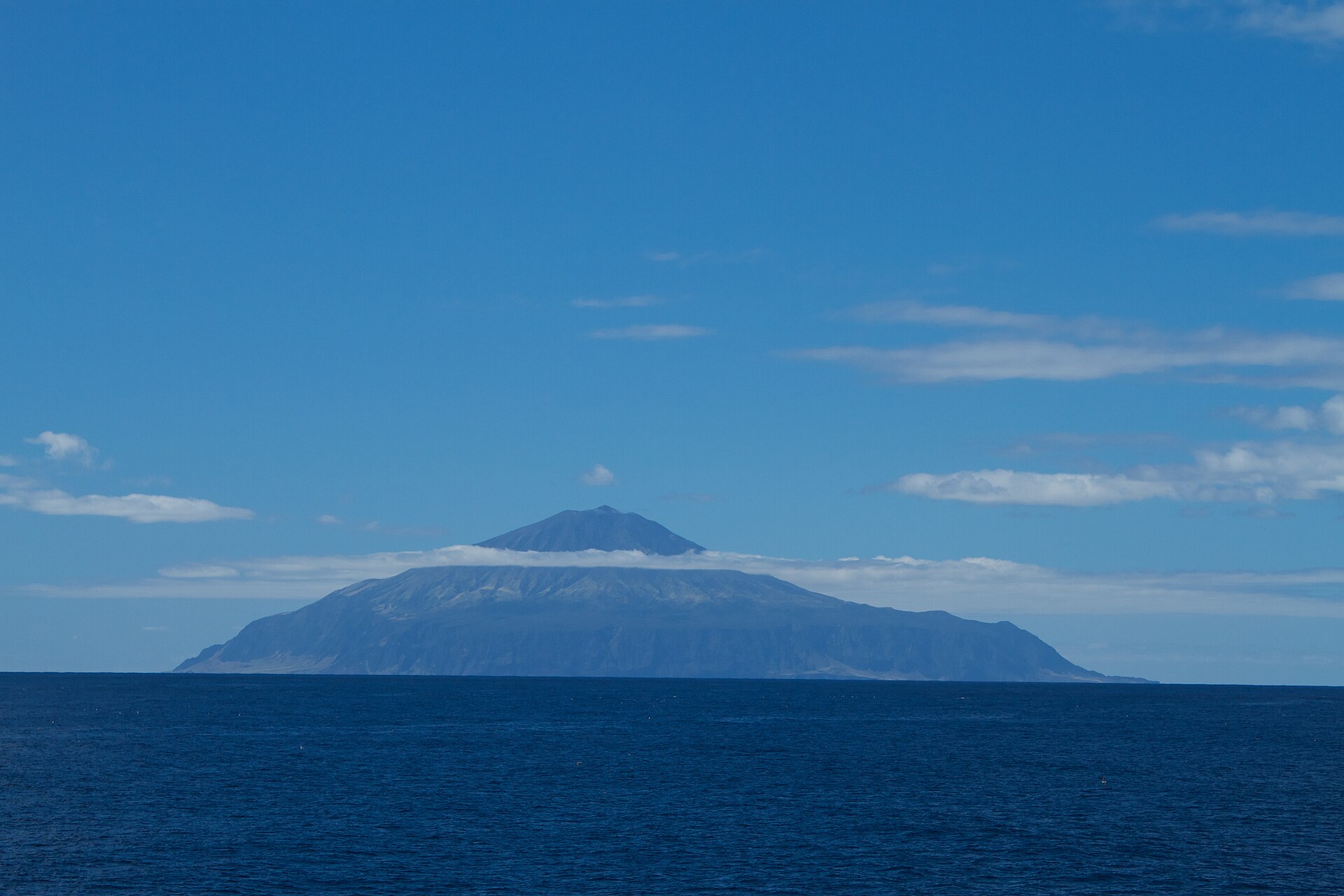
Nightingale Island lies roughly 35 kilometres south of the settlement of Edinburgh of the Seven Seas, and Inaccessible Island about 45 kilometres to the west. Neither has a harbour, a jetty, or a resident population. Both are reached only by small boat from Tristan, weather permitting, and both trips are run as occasional outings rather than a fixed tourist schedule. For visitors, the words to remember are: possible, not guaranteed.
How the trips are arranged
There is no ferry timetable to either island. Outings are organised locally, usually by a Tristan boat owner or the island's tourism contact, once conditions look settled for a window of several hours. A visitor who wants to reach Nightingale or Inaccessible should register interest on arrival in Edinburgh of the Seven Seas, then wait. Groups are typically small, six to twelve people, since the open boats used for the crossing have limited passenger capacity and need room for landing gear. Costs for a day trip have historically run from about 80 to 150 GBP per person, depending on fuel, boat size, and group numbers, though this should always be confirmed locally rather than assumed from past figures.
Nightingale: the easier landing, not an easy one
Nightingale is the smallest of Tristan's three outer islands, about 4 square kilometres, and home to dense colonies of rockhopper penguins, yellow-nosed albatross, and the Nightingale finch found nowhere else. There is no beach in the conventional sense: landing means a wet, rocky scramble helped by whoever is already standing on the rocks. Good footwear with real grip matters more than any other piece of kit. A typical visit allows three to five hours ashore, enough to walk marked paths through tussock grass to the main seabird areas and back to the landing point before the boat needs to leave.
Inaccessible: longer crossing, stricter limits
Inaccessible Island is larger, around 14 square kilometres, with steep cliffs ringing most of its coast and only a handful of viable landing points, used only in calm conditions. It holds UNESCO World Heritage status jointly with Nightingale and Gough Island, and access is more tightly controlled: visitor numbers, routes, and sometimes the need for a permit are managed through the Tristan da Cunha Conservation Department. Rats and other introduced predators have never reached Inaccessible, which is part of why its colonies of Spectacled Petrels and other burrowing seabirds remain so dense, and why boots, bags, and clothing are checked for stowaway seeds or insects before departure.
Register your interest in an outer-island trip as soon as you land on Tristan, not a day or two before you hope to leave. Bring motion sickness medication, a dry bag for cameras, and expect the return time to shift by hours if the swell builds during the day.
Weather is the only schedule that matters
The South Atlantic swell around Tristan can change within a single morning. A boat operator who confirms a Nightingale run at 07:00 may cancel it by 09:00 if the wind has backed and the landing site has become unsafe. This is not inefficiency, it is the system functioning as it should: no guide or boatman will risk a landing in marginal surf for the sake of a fixed itinerary. Visitors who build in at least one spare day before their return transport, whether by the RMS St Helena successor vessel or a fishing boat passage, have a far better chance of actually setting foot on either island rather than simply viewing it from the water.
What to bring and what not to expect
There are no facilities on either island: no shelter, no toilets, no fresh water source that should be relied upon. A packed lunch, at least two litres of water, sun protection, and warm layers are standard regardless of season, since weather on the water can differ sharply from a calm morning in the settlement. Mobile phone coverage does not extend to either island, so a torch and basic first aid should be treated as essential rather than optional. Photography is the main occupation once ashore: both islands host seabird densities rarely seen outside the Southern Ocean's most remote breeding grounds, and neither has paths wide enough, or numbers high enough, to ever feel crowded.
Seasonal considerations
October through April is generally regarded as the more settled window for outer-island trips, coinciding with the Southern Hemisphere summer and the peak breeding season for most seabird species, including the rockhoppers on Nightingale. Outside these months, the settlement's own boats are often hauled out or restricted to local fishing, and outer-island day trips become rarer still. None of this should be read as a promise: a visitor arriving in January can be as easily weathered out as one arriving in June, and the 240 residents of Tristan plan their own lives around exactly this unpredictability, without treating it as a crisis.