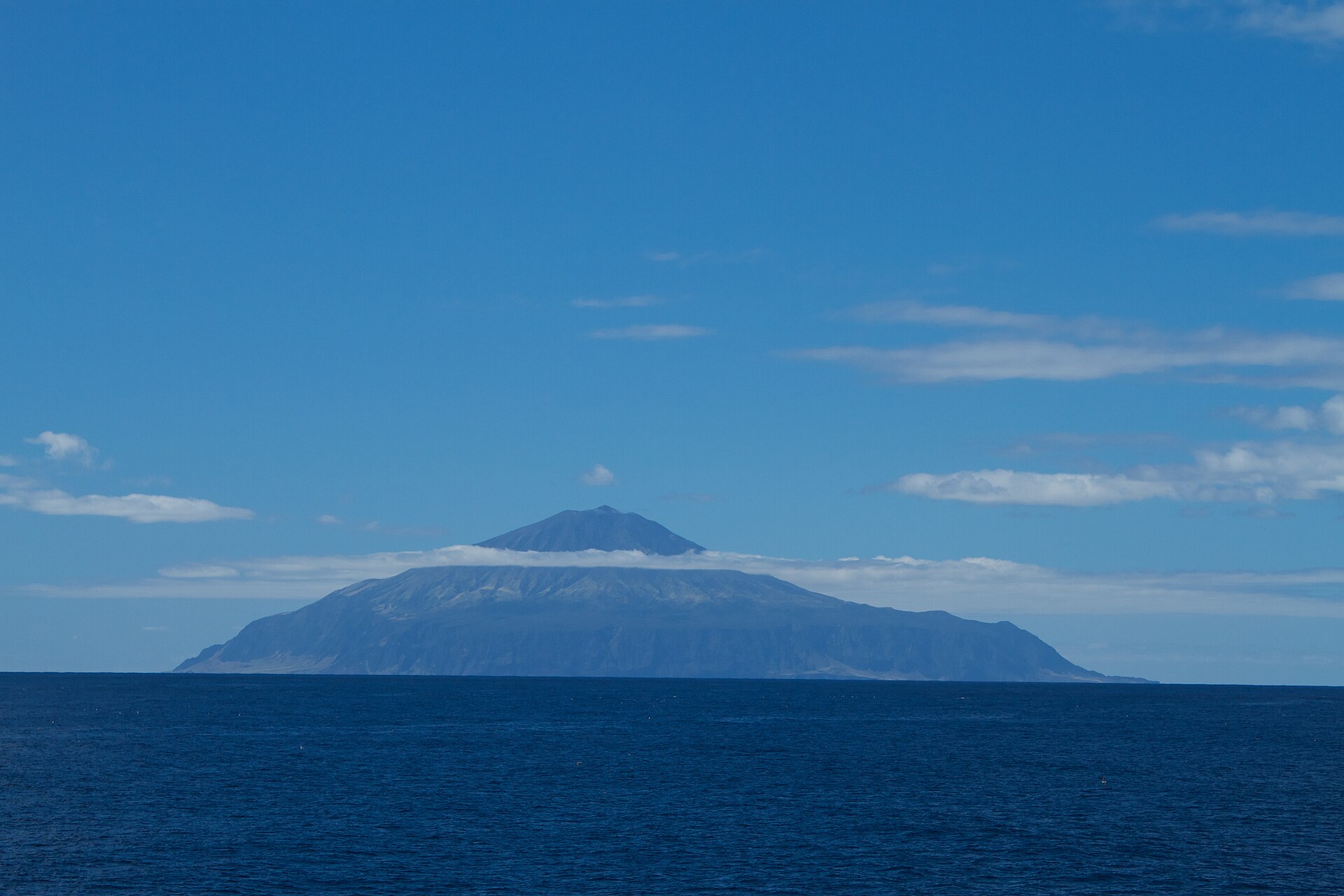
Tristan da Cunha has no airport, no ferry company, and no printed timetable searchable by date. The settlement of 240 people depends on a short list of ships: a vessel chartered for fishing and freight that also carries passengers, occasional yachts, and a handful of cruise ship visits that may or may not land a tender ashore. Booking a berth means booking a place on a voyage, not purchasing a ticket from a counter, and the first fact worth accepting is that the calendar bends to the South Atlantic, not the other way round.
Why there is no timetable, only voyages
The island sits roughly 2,800 kilometres from Cape Town, the nearest port with regular shipping links. No scheduled passenger line runs this route. The main connection is the supply vessel contracted to the Tristan da Cunha government, which completes a limited number of return trips a year, often cited at somewhere between seven and nine port calls, each one combining cargo, mail and a small allocation of passenger cabins. Reading the island's sailing schedule means reading a published list of planned voyages for the year, not a daily departure board.
The arithmetic: kilometres, days, berths
Cape Town to Tristan runs about 2,800 kilometres of open South Atlantic. The passage typically takes six days at sea, occasionally seven if swell in the Roaring Forties slows the ship. Passenger space is limited, often described as a dozen or so cabins, shared between visitors, returning islanders and crew. Cruise ships carry far larger numbers but landings ashore depend on swell at Calshot Harbour, the island's only usable anchorage, and are never guaranteed even when the ship itself arrives on schedule. For a visitor using the supply vessel, a full round trip, including days anchored at the island, commonly runs three to four weeks door to door from Cape Town.
Who to contact, and how far ahead
Berths and landing permits are arranged through the Tristan da Cunha Association or the island's administration, not through a general travel agent. Applications typically need to go in six to twelve months ahead of a planned voyage, since the year's sailing list is usually settled during the preceding winter in the southern hemisphere. Expect to supply a passport, proof of travel insurance that covers evacuation, and a short statement of purpose, since the island's administration screens visitors before allocating any of the limited cabins.
Passenger space on the supply vessel is limited and shared with cargo, mail and returning islanders. Apply for the landing permit before asking about a cabin: without the permit, no berth is offered.
Costs and what a berth includes
A one-way berth on the supply vessel is commonly quoted in the range of 2,000 to 3,500 US dollars, depending on cabin class and that year's charter cost, and usually covers meals and the passage itself, not the landing permit fee or accommodation on the island. Guesthouses in Edinburgh of the Seven Seas, the island's only settlement, are arranged directly with island residents rather than through a central booking platform, and typically charge somewhere in the region of 60 to 90 US dollars a night. Travellers should budget the outward passage, several days to weeks ashore, and the return passage as three separate costs, not one package price.
Weather, delays, and why they count as normal
Delays of a few days at either end of a voyage are routine on this route, usually caused by swell at Calshot Harbour rather than any mechanical problem with the ship. The island's own approach to this is calm: a delayed landing or a postponed departure is the system working as designed, not a failure of it. Anyone booking a berth should build a buffer of at least a week on either side of the planned return sailing, and should check the day's schedule with the administration close to departure rather than relying on a date fixed months earlier.