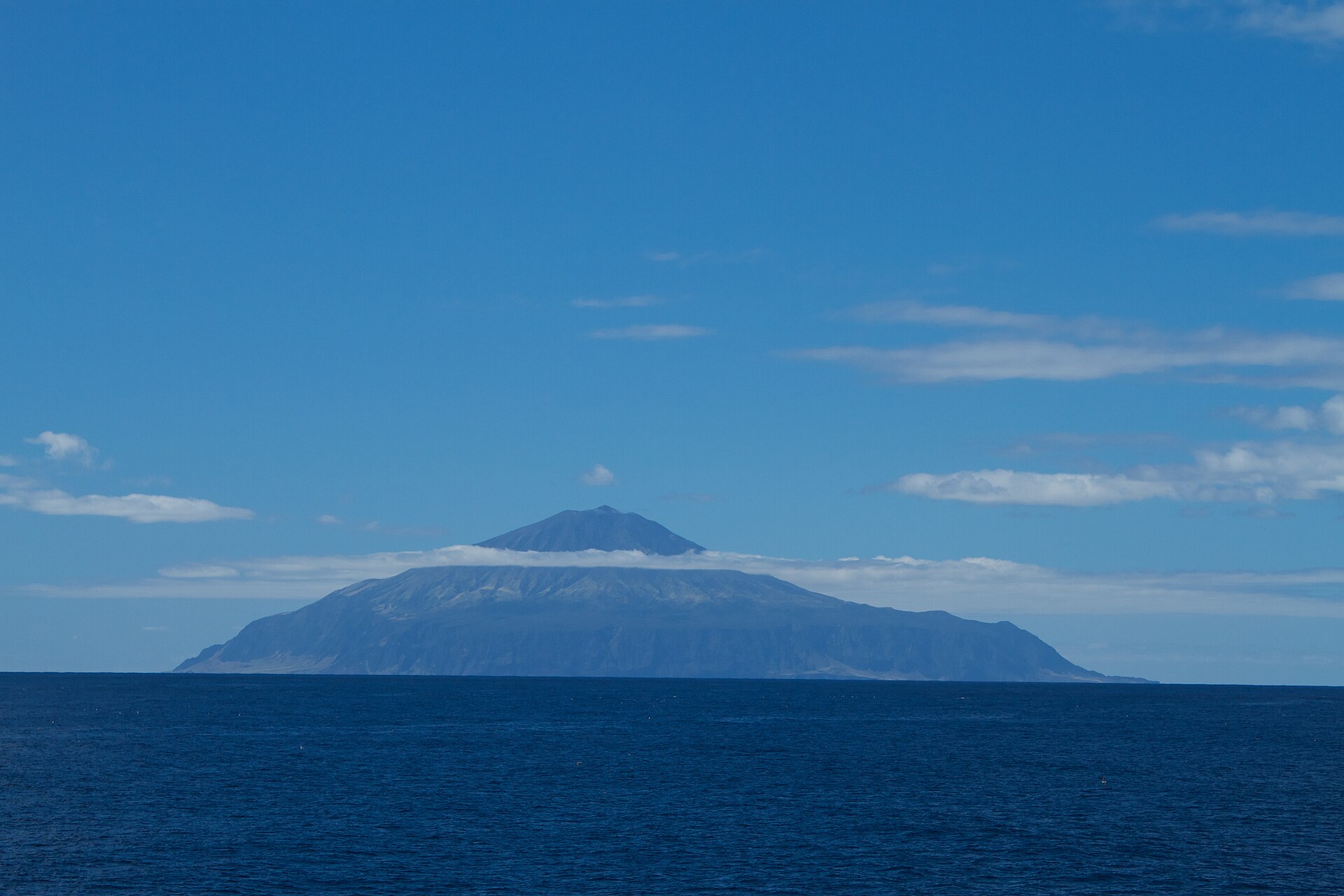
Tristan da Cunha has no flights, no fixed fare chart, and no tourist board setting prices. What it has is a six-day Atlantic crossing on a fisheries or supply vessel, a handful of guesthouse rooms in the Settlement, and a logistics chain that runs on weather, not demand. Budgeting for Tristan means pricing three things separately: the voyage from Cape Town, the days on the island, and the slack time you must build in on both ends because the ship's return date is never guaranteed to the day.
The voyage: the single biggest line item
There is no scheduled passenger service to Tristan da Cunha. Access depends on fishing vessels, the occasional RMS-style supply run, or a yacht passage, and berths are limited, often fewer than a dozen per sailing. A one-way berth from Cape Town typically runs from roughly 2,000 to 3,500 USD depending on the vessel and season, with a round trip costing proportionally more once you factor in the return leg, which may be on a different ship weeks later. This is before food aboard, which is sometimes included and sometimes not. The crossing itself takes five to seven days each way, so ten to fourteen days of your trip are spent at sea before you set foot on the 98 square kilometres of the island. For the mechanics of booking, including who to contact and how far ahead to apply, see how to get to Tristan da Cunha and the companion piece on reading the sailing schedule.
Cape Town: the costs before the costs
Almost every visitor spends several nights in Cape Town waiting for a sailing window, and often several more on return if the ship is delayed. Budget 60 to 150 USD a night for a mid-range guesthouse, multiplied by an unpredictable number of nights: departures can slip by a week or more if cargo, weather, or fishing operations change the schedule. This is not a flaw in the system; it is the system working as designed around a working ship rather than a cruise timetable. Travellers who treat the Cape Town leg as a fixed two-night stopover are usually the ones caught short on cash and patience. Details on where to base yourself, on the island and before you sail, are gathered in the guide to where to stay on Tristan da Cunha and in Cape Town.
On the island: lodging and food
Accommodation in the Settlement of Edinburgh of the Seven Seas is limited to a small number of guesthouses and self-catering rooms run by island families, since there are no hotel chains and no large-scale tourism infrastructure for a community of 240 people. Expect to pay roughly 50 to 90 USD per night for a room, often with breakfast, sometimes with full board arranged separately. Self-caterers can buy basic supplies at the island shop, though prices run higher than mainland South Africa because everything arrives by the same ship you did. A realistic daily food budget, eating mostly local and shop-bought meals, sits between 20 and 35 USD. Full board through a guesthouse can simplify this considerably, and is worth asking about when you book. See the accommodation guide for what each option includes.
Visitors need prior permission from the Tristan da Cunha Island Council, arranged in advance through the island's administration, and there may be a modest landing or conservation fee payable on arrival. These costs are small next to the voyage and lodging, generally under 100 USD combined, but they must be settled before you sail, not after.
Time on the island: how many days you actually get
Because the ship does not simply drop you and return the next week, most itineraries settle around two to three weeks of actual island time, bookended by the crossing. That window is enough for a full week of daily life, the ascent of Queen Mary's Peak on a clear-weather day, and, conditions allowing, a day trip to the outer islands. Weather can cancel outer-island landings entirely in a given season, so budget for the possibility of paying for a trip that doesn't happen, a cost worth building into your contingency figure rather than treating as a guaranteed outing. The outer island day trips guide explains what is and isn't likely to run.
Putting a total figure on it
Adding it up: a round-trip berth near 3,000 to 6,000 USD, Cape Town stopovers of 300 to 900 USD depending on delays, island lodging and food for two to three weeks around 1,000 to 2,000 USD, and permits and incidentals under 200 USD, a realistic total for one traveller lands somewhere between 4,500 and 9,000 USD. That range is wide because the variables, ship availability, weather, and length of Cape Town delay, are themselves wide. What stays constant is the arithmetic: kilometres travelled, days committed, and the single berth that has to be secured months in advance.
What tends to blow the budget
The most common overspend is not a line item but a miscalculation: travellers who book a fixed return flight home from Cape Town too soon after the expected ship arrival, then pay rebooking fees when the vessel runs late. A second is underestimating Cape Town nights on both ends. A third is assuming outer-island trips are included rather than weather-dependent extras. None of this is mismanagement on Tristan's part; a community of 240 running its own shipping logistics around fishing seasons and the South Atlantic swell will always answer to the sea before the calendar. Anyone spending a week in the Settlement itself will find the real costs, once you are there, are modest; the money and the patience go into getting there and back.